logo

products details

Created with Pixso. Home Created with Pixso. Products Created with Pixso.
Rubber Shock Absorber
Created with Pixso.

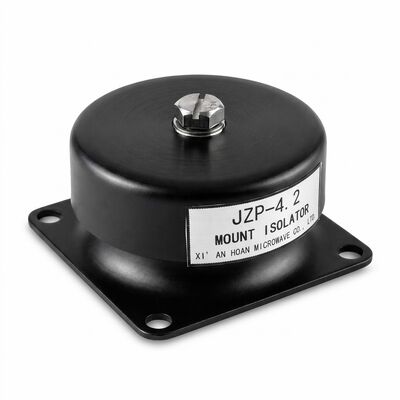
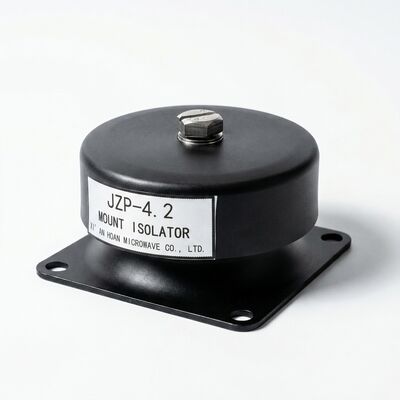
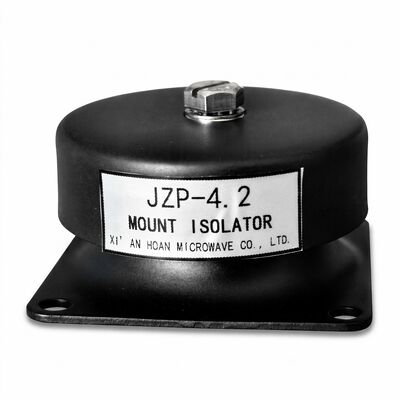
JZP-4.2 Chemical Resistant Rubber Vibration Isolator Mount Shock Absorber Mount for Light Machinery Isolation

JZP-4.2 Chemical Resistant Rubber Vibration Isolator Mount Shock Absorber Mount for Light Machinery Isolation

Brand Name: Hoan
Model Number: JZP-4.2
MOQ: 10 Pieces
Payment Terms: L/C,D/A,Western Union,D/P,T/T
Detail Information
Place of Origin:
Shaanxi, China
Certification:
ISO 9001:2015
Material:
NBR / Fluorocarbon-modified Elastomer
Model:
JZP-4.2
Static Load Rating:
5-50 Kg Per Mount
Hardness (Outer / Inner):
Shore A 55 ±5 / 42 ±3
Natural Frequency (at 20 Kg Load):
10-14 Hz
Maximum Deflection:
4.5 Mm At Rated Load
Overall Diameter:
40 ±0.5 Mm
Overall Height:
30 ±0.5 Mm
Stud Thread:
M8 × 1.25 (top 15mm / Bottom 18mm)
Unit Weight:
85 ±5 G
Operating Temperature:
-30°C To +110°C
Mount Type:
Stud Type
Highlight:

Oil Fuel Chemical Resistance

,

Ultra-Lightweight Isolation Mount

,

Rubber Vibration Isolator Mount

Product Description

JZP-4.2 Chemical Resistant Rubber Vibration Isolator Mount — Lightweight Isolation for Harsh Environments

What Makes the JZP-4.2 Different from Standard Rubber Mounts?

Most off-the-shelf Rubber Vibration Isolator products degrade within months when exposed to oils, fuels, or industrial solvents. The JZP-4.2 Vibration Isolator Mount addresses this failure point at the material level. Its elastomer compound is formulated with acrylonitrile-butadiene (NBR) and select fluorocarbon modifiers, giving it swell resistance that outperforms general-purpose natural rubber by a factor of 3–5* in ASTM D471 immersion tests. For maintenance teams managing pump skids, small compressors, or portable generator sets where incidental fuel and lubricant contact is unavoidable, this translates directly to longer replacement intervals and fewer unplanned shutdowns.

Material Composition & Chemical Compatibility

Chemical Exposure Compatibility Rating Max Service Temp
Diesel Fuel / Gasoline Excellent — < 5% volume swell 85°C continuous
Hydraulic Oil (mineral-based) Excellent — < 3% volume swell 100°C continuous
ASTM #1 / #3 Test Oils Good — < 8% volume swell 100°C continuous
Ethylene Glycol (coolant) Excellent — negligible attack 90°C continuous
Dilute Acids & Alkalis (pH 4–10) Good — surface discoloration only 60°C intermittent
Skydrol / Phosphate Ester Fluids Not recommended

The JZP-4.2 Mount Isolator body uses a dual-durometer construction: a Shore A 55 ±5 outer jacket for oil resistance paired with a Shore A 42 ±3 inner core that provides the actual isolation performance. This co-vulcanized design eliminates adhesive bond lines — a common failure point in laminated mounts — and keeps the total part weight under 90 grams.

Ultra-Lightweight Isolation — Why Mass Matters

In light machinery applications, every gram added to the isolation system raises the suspended mass and shifts the system’s natural frequency downward — often into the excitation range of the equipment itself. The JZP-4.2 Shock Absorber Mount weighs just 85 ±5 g per unit, making it one of the lowest-mass isolating mounts in its load class (rated 5–50 kg static load per mount). For a four-point installation under a 40 kg compressor package, the total isolator weight is under 0.34 kg — less than 1% of the supported mass. This preserves the original equipment footprint without requiring larger baseplates or additional counterweights.

Weight comparison with equivalent-load mounts:

Mount Type Per-Unit Weight Weight Ratio vs JZP-4.2
JZP-4.2 (NBR/elastomer) 85 g 1.0* (baseline)
Cast iron housing rubber mount 420–650 g 4.9–7.6*
Steel spring isolator 380–550 g 4.5–6.5*
Wire rope isolator (aluminum) 180–300 g 2.1–3.5*

Installation & Dimensional Data

Parameter Value
Overall Diameter 40 ±0.5 mm
Overall Height 30 ±0.5 mm
Stud Thread (top) M8 * 1.25, length 15 mm
Stud Thread (bottom) M8 * 1.25, length 18 mm
Recommended Torque 18–22 N·m
Washer OD 24 mm, zinc-plated steel
Operating Temperature Range -30°C to +110°C
Color Black (carbon-filled)

Typical Deployment Scenarios

  • Compact Diesel Generators (2–8 kVA): Bolted between the engine-alternator subframe and the outer enclosure to isolate 25–50 Hz vibration from the canopy panels. The oil-resistant formula handles inevitable diesel spillage during refueling.
  • Laboratory Vacuum Pumps: Installed under rotary vane and scroll pumps (15–40 kg range) to prevent structure-borne noise transmission into benchtops. The Rubber Vibration Isolator material is inert to incidental vacuum pump oil mist.
  • Portable Air Compressors: Four-point mounting under 24–50 L tank assemblies where total suspended mass is 30–80 kg. Chemical resistance protects against compressor oil carryover.
  • Marine Bilge Pump Modules: In enclosed bilge compartments, the JZP-4.2 is rated for intermittent exposure to bilge water with traces of diesel and lube oil — common conditions on workboats and fishing vessels.

Frequently Asked Questions

Q: Can the JZP-4.2 be used outdoors without a protective cover?
A: Yes. The NBR-based compound contains UV stabilizers and carbon black filler. Direct sunlight exposure will cause surface discoloration over 2–3 years but does not materially affect isolation performance. A simple sheet-metal shield extends service life if cosmetics are a concern.

Q: What happens if the torque exceeds 22 N·m during installation?
A: Over-torquing compresses the rubber beyond its design preload, which raises the dynamic stiffness and shifts the isolation frequency upward. The M8 stud is rated to 25 N·m ultimate, but isolation performance is optimized at 18–22 N·m. Use a calibrated torque wrench.

Q: Is the JZP-4.2 a direct replacement for cylindrical rubber mounts with the same M8 thread?
A: Mechanically yes — the M8*1.25 interface is standard. However, verify the static load per mount. The JZP-4.2 is rated for 5–50 kg. Exceeding 50 kg results in excessive creep. Running below 5 kg provides insufficient preload and may cause chatter.

For technical datasheets, volume pricing, or to request a sample pack for on-site compatibility testing, contact our application engineering team today.