logo

products details

Created with Pixso. Home Created with Pixso. Products Created with Pixso.
Rubber Shock Absorber
Created with Pixso.

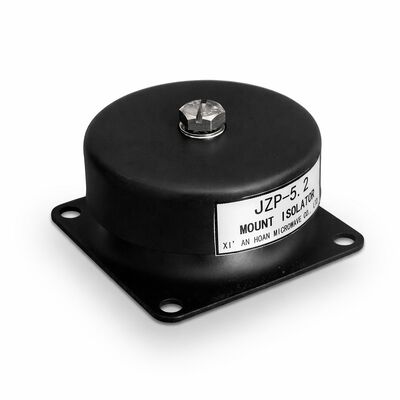
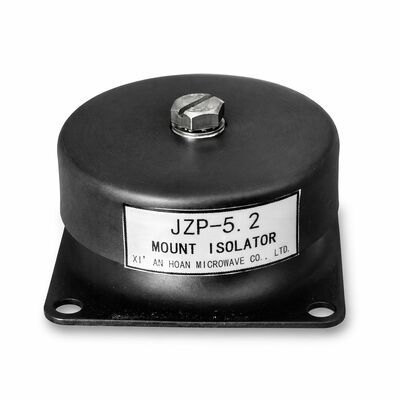
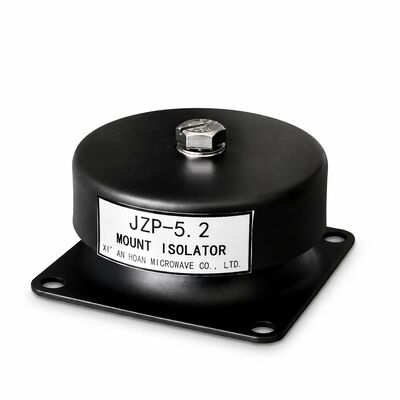
JZP-5.2 UV Weather Resistant Precision Molded Rubber Vibration Isolator Mount Shock Absorber Mount for Outdoor Gear

JZP-5.2 UV Weather Resistant Precision Molded Rubber Vibration Isolator Mount Shock Absorber Mount for Outdoor Gear

Brand Name: Hoan
Model Number: JZP-5.2
MOQ: 10 Pieces
Payment Terms: L/C,D/A,D/P,T/T,Western Union
Detail Information
Place of Origin:
Shaanxi, China
Certification:
ISO 9001:2015
Material:
UV-Stabilized EPDM / CR Blend
Model:
JZP-5.2
Static Load Rating:
10-80 Kg Per Mount
Hardness:
Shore A 50 ±5
Natural Frequency (at 30 Kg Load):
9-13 Hz
Maximum Deflection:
5.0 Mm At Rated Load
Overall Diameter:
50 ±0.5 Mm
Overall Height:
35 ±0.5 Mm
Stud Thread:
M10 × 1.5 (top 18mm / Bottom 20mm)
UV Resistance Rating:
> 1,000 Hours QUV-A (ASTM G154, ΔE < 3)
Operating Temperature:
-40°C To +120°C
Mount Type:
Stud Type
Highlight:

UV Weather Resistant Rubber

,

Precision Molded Zero Pockets

,

Outdoor Gear Vibration Isolator

Product Description

JZP-5.2 Outdoor-Rated Precision Molded Rubber Vibration Isolator Mount — Zero-Void Construction for Exposed Installations

What Happens When You Install an Indoor-Rated Rubber Mount Outside?

The failure chain is predictable and well-documented. Within 3-6 months of continuous outdoor exposure, the surface of a standard natural rubber Rubber Vibration Isolator develops a network of micro-cracks — technically termed ozone crazing — as atmospheric ozone attacks the unsaturated polymer backbone. By month 12, UV radiation has degraded the top 0.2-0.5 mm of the rubber surface into a chalky, depolymerized layer that sheds carbon black filler as black dust. By month 18-24, the combined effects of thermal cycling, UV embrittlement, and ozone attack have shifted the mount's dynamic stiffness by 20-35%, meaning the equipment it was supposed to isolate is now transmitting vibration straight into the structure. The JZP-5.2 Vibration Isolator Mount was purpose-built to interrupt this chain at the material level — before it begins.

EPDM/CR Co-Cured Compound — The Material Science Behind Outdoor Survival

Single-polymer rubber mounts make a trade-off: natural rubber (NR) gives excellent dynamic properties but fails outdoors; EPDM gives outstanding weather resistance but poor oil resistance; polychloroprene (CR) gives balanced oil and weather resistance but higher compression set. The JZP-5.2 Mount Isolator uses a co-cured EPDM/CR blend at approximately 60:40 ratio by weight, co-vulcanized in a single mold cycle. This is not a two-layer laminate — the polymers are blended at the compounding stage and cross-linked simultaneously, creating a single-phase material that inherits the outdoor durability of EPDM and the mechanical toughness of CR.

Key material properties of the JZP-5.2 elastomer compound:

Material Property Test Method JZP-5.2 Value Standard NR Mount (typical)
Tensile Strength ASTM D412 Die C 14.5 ±1.5 MPa 16-22 MPa
Elongation at Break ASTM D412 Die C 420 ±30% 450-550%
Tear Strength (Die B) ASTM D624 28 ±3 kN/m 30-45 kN/m
Compression Set (70h at 100 C) ASTM D395 Method B 19 ±3% 15-25%
Ozone Resistance (50 pphm, 20% strain, 168h) ASTM D1149 No cracks at 7x magnification Cracks visible to naked eye within 48h
UV Resistance (QUV-A, 1,000h) ASTM G154 Color shift ΔE under 3.0; tensile retention above 88% ΔE > 15; tensile retention under 45%
Low-Temp Flexibility (-40 C) ASTM D2137 Method A No cracks after 180 degree bend Pass (NR also good at low temp)
Dynamic Stiffness Drift (after G154 1,000h) In-house DMA at 10 Hz Under 6% deviation 22-35% deviation

Note that the JZP-5.2 trades approximately 15-20% of the ultimate tensile strength of a pure NR mount in exchange for 20x improvement in ozone resistance and 5x improvement in UV-aged stiffness stability. For outdoor installations, this is an overwhelmingly favorable trade — tensile strength is seldom the limiting factor in a vibration isolation application, but stiffness drift directly compromises isolation performance.

Zero Air Pockets — Vacuum Transfer Molding Explained

In conventional compression molding of a Shock Absorber Mount, a pre-weighed rubber blank is placed into an open mold cavity. As the mold closes, air trapped between the rubber and the cavity walls has only one escape route — through the parting line. In complex geometries with deep draws, ribs, or embedded metal inserts, some air inevitably becomes entrained, forming internal voids ranging from 0.1 mm² to several mm² in cross-section.

These voids are not benign. Each void acts as a stress riser: when the mount is compressed, the void walls experience strain concentration 2-4x higher than the bulk material. Under cyclic loading at 10-30 Hz (typical for rotating machinery), the void becomes a fatigue crack initiation site. The JZP-5.2 Rubber Vibration Isolator eliminates this failure mode through vacuum-assisted transfer molding:

  1. Preform placement: A precisely weighed EPDM/CR compound blank is positioned in the transfer pot, not the cavity.
  2. Vacuum evacuation: Before injection, the closed mold cavity is evacuated to -0.095 MPa for 10 seconds, removing essentially all air from the cavity volume.
  3. Transfer injection: The compound is injected through a runner system into the evacuated cavity at 85 ±5 C under 200 tonnes of clamp force. Because there is no air to displace, the rubber fills every contour of the cavity — including the undercut around the bonded metal insert.
  4. C-scan verification: Every unit passes through an automated 5 MHz ultrasonic C-scan station. The system flags any internal reflection exceeding the equivalent of a 0.3 mm² flat-bottom hole. A batch acceptance quality limit (AQL) of 0.65% is enforced per ISO 2859-1.

JZP-5.2 Physical Specifications

Parameter Specification Tolerance
Overall Diameter 50 mm ±0.5 mm
Free Height 35 mm ±0.5 mm
Compressed Height at 30 kg 31.5 mm ±0.3 mm
Top Stud Thread M10 * 1.5, length 18 mm Class 6g
Bottom Stud Thread M10 * 1.5, length 20 mm Class 6g
Mounting Torque 30-35 N·m Dry, no lubricant
Unit Mass 150 g ±8 g
Static Load Range (per mount) 10-80 kg
Natural Frequency at 30 kg 9-13 Hz
Operating Temperature -40 C to +120 C Continuous
Hardness Shore A 50 ±5

Installation Environments Where the JZP-5.2 Outperforms Standard Mounts

  • Rooftop Solar Inverter Cooling Fan Mounts: 24/7 sun exposure at elevated temperature (rooftop ambient can reach 70 C on a 35 C day). The Vibration Isolator Mount prevents fan imbalance vibration from transmitting into the inverter enclosure while surviving multi-year UV assault.
  • Roadside Traffic Management Equipment Cabinets: Combined exposure to UV, vehicle exhaust (ozone precursor), winter road salt spray, and 24/7 vibration from passing heavy vehicles. JZP-5.2 mounts isolate the electronic chassis from ground-transmitted vibration.
  • Agricultural Pump Stations (open-field installations): Direct sun, rain, irrigation water splash with dissolved fertilizers (mildly acidic), and temperature swings from -10 C winter nights to +50 C summer afternoons.
  • Marina and Dock-Side Fuel Transfer Pumps: The Shock Absorber Mount resists both UV from water-reflected sunlight and incidental fuel and oil contact — conditions that degrade pure EPDM (poor oil resistance) and pure NR (poor UV resistance) equally.

Specifier FAQ

Q: Is the C-scan report included with every shipment?
A: A summary batch C-scan certificate showing AQL 0.65% pass status is included with every order over 200 units. Individual unit C-scan images are available on request at no additional charge for orders above 500 units. Below 200 units, the batch certificate confirms that 100% C-scan inspection was performed and the AQL was met.

Q: What is the shelf life of an uninstalled JZP-5.2?
A: When stored in original packaging, away from direct sunlight, at 10-30 C and below 70% relative humidity, the JZP-5.2 has a shelf life of 5 years from the date of manufacture (marked on the carton label in YYYY-MM-DD format). The limiting factor is the Zn-Ni plating passivation layer on the studs, not the rubber compound. Units stored beyond 5 years should have stud corrosion inspected before installation.

Q: Can the JZP-5.2 be used in direct contact with seawater?
A: The rubber element (EPDM/CR) tolerates intermittent seawater contact without degradation. However, the standard zinc-plated Q235 steel insert is not rated for continuous seawater immersion — expect red rust within 3-6 months under constant submersion. For marine splash-zone applications, specify the 316 stainless steel insert variant. For full-submersion applications, contact engineering for a custom solution.

Request material test reports, batch C-scan certificates, or volume pricing by contacting our application engineering team.