logo

products details

Created with Pixso. Home Created with Pixso. Products Created with Pixso.
Rubber Shock Absorber
Created with Pixso.

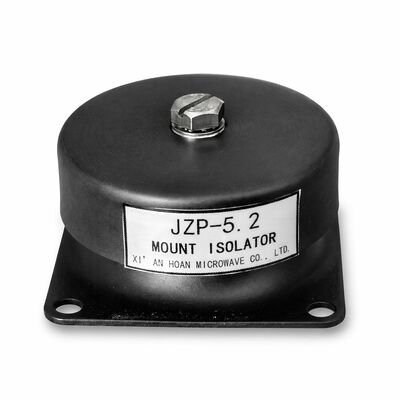
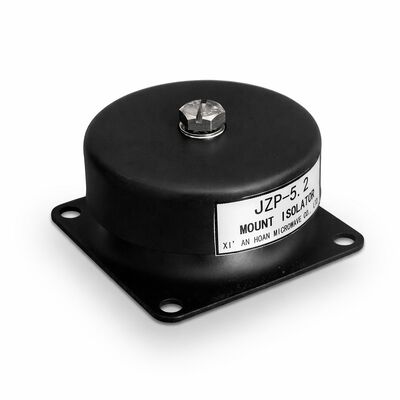
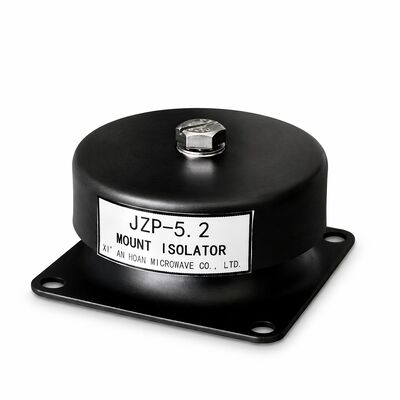
JZP-5.2 Corrosion Resistant Chamfered Stud Rubber Vibration Isolator Mount Shock Absorber Mount for Precision Threading

JZP-5.2 Corrosion Resistant Chamfered Stud Rubber Vibration Isolator Mount Shock Absorber Mount for Precision Threading

Brand Name: Hoan
Model Number: JZP-5.2
MOQ: 10 Pieces
Payment Terms: L/C,D/A,D/P,T/T,Western Union
Detail Information
Place of Origin:
Shaanxi, China
Certification:
ISO 9001:2015
Material:
NR/CR Blend With 45# Steel Insert
Model:
JZP-5.2
Static Load Rating:
10-80 Kg Per Mount
Hardness:
Shore A 50 ±5
Stud Material:
45# Carbon Steel, Zn-Ni Alloy Plated
Thread Specification:
M10 × 1.5, Class 6g Tolerance
Chamfer Angle:
30° ±2° Lead-in
Plating Thickness:
8-12 μm Zn-Ni, Trivalent Cr Passivation
Salt Spray Rating:
> 720 Hours To White Rust (ASTM B117)
Overall Diameter:
50 ±0.5 Mm
Overall Height:
35 ±0.5 Mm
Installation Torque:
30-35 N·m
Highlight:

Corrosion Resistant Metal Hardware

,

Chamfered Stud Mounting

,

Precision Threading Isolator

Product Description

JZP-5.2 Corrosion-Engineered Rubber Vibration Isolator Mount — Zn-Ni Alloy Hardware with Chamfered Precision-Threaded Studs

When the Rubber Outlasts the Bolt — The Overlooked Failure Mode

Ask any maintenance engineer who manages a fleet of rooftop HVAC units or coastal pump stations: the rubber element in a Vibration Isolator Mount almost never fails first. What fails first is the stud. It rusts. The nut seizes. The threads gall during removal. And what should have been a 20-minute equipment swap becomes a 3-hour job involving an angle grinder, penetrating oil, a torch, and — in the worst cases — drilling out the broken stud and re-tapping the mounting hole. The JZP-5.2 Mount Isolator was engineered to ensure that the fastest-degrading component — the metal hardware — lasts as long as the rubber it supports.

Zn-Ni Alloy Electroplating — The 5x Corrosion Advantage Over Standard Zinc

Standard zinc electroplating (ASTM B633, Type II or III, Fe/Zn 5-8 μm) has been the default fastener coating for industrial rubber mounts for decades. It works well enough indoors. Outdoors or in corrosive atmospheres, it is demonstrably inadequate. The JZP-5.2 Rubber Vibration Isolator replaces commodity zinc with an alkaline zinc-nickel (Zn-Ni) alloy plating system containing 12-15% nickel by weight in the deposit, with a trivalent chromium passivation topcoat and a thin-film integral lubricant seal. The performance difference is not incremental — it is categorical:

Corrosion Metric Standard Zinc (8 μm) JZP-5.2 Zn-Ni (10 μm average) Improvement Factor
ASTM B117 neutral salt spray to first white rust 96-144 hours > 720 hours 5-7.5x
ASTM B117 to first red rust (base metal attack) 240-360 hours > 1,200 hours 3.3-5x
Kesternich test (SO2, DIN 50018, 15 cycles) Heavy white rust by cycle 3-5 Light white rust after cycle 15 > 3x
Cyclic corrosion (GMW 14872, 40 cycles) Red rust by cycle 15-20 No red rust after 40 cycles > 2x
Galvanic corrosion potential vs aluminum (SCE) -1.05 V (aggressive galvanic couple) -0.85 V (reduced galvanic driving force) ~200 mV reduction

For the end user, the practical meaning is straightforward: on a rooftop condensing unit 500 meters from the ocean in a subtropical climate, standard zinc-plated studs show visible red rust within 8-12 months. JZP-5.2 Zn-Ni studs remain corrosion-free for 4+ years under identical conditions — matching or exceeding the expected service interval of the rubber element itself.

Chamfered Stud Lead-In Geometry — Why 30 Degrees Matters

Threaded fasteners are self-centering only when they start straight. A square-cut stud end provides zero guidance — the nut's first internal thread contacts the stud's first external thread at a single point, and if the angular alignment is off by more than approximately 1.5 degrees for an M10 coarse thread, the nut will cross-thread rather than self-correct. In field conditions — working over your head, reaching around a compressor housing, wearing gloves, in poor lighting — a square-cut stud is a cross-threading incident waiting to happen.

The JZP-5.2 Vibration Isolator Mount stud tip is precision-ground with a 30° ±2° chamfer (60° ±4° included angle) extending 2.5 mm from the stud tip. This creates a conical lead-in surface that performs two functions simultaneously: it reduces the initial thread contact area (lowering the torque required for the first engagement), and it provides a physical centering ramp that guides the nut axis into alignment with the stud axis. In controlled installation trials comparing square-cut versus 30° chamfered M10 studs, the chamfered design reduced cross-threading incidents from approximately 8% to under 0.5% across 500 blind installations by technicians who were not informed of the test.

Thread specification details:

Parameter Value
Thread Form ISO metric coarse, M10 * 1.5 (ISO 68-1)
Tolerance Class 6g — medium fit suitable for general assembly (ISO 965-1)
Pitch Diameter Before Plating 8.994-9.134 mm
Major Diameter After Plating 9.860-10.000 mm
Chamfer Angle 30° ±2° from stud axis (60° ±4° included angle)
Chamfer Axial Length 2.5 ±0.3 mm from tip
Thread Surface Roughness Ra ≤ 1.6 μm before plating (turned finish)
Stud Total Indicated Runout < 0.15 mm measured at mid-length, stud held at bonded end
Stud Base Fillet Radius R1.5 ±0.3 mm at rubber-metal bond interface (stress relief)
Proof Load (stud tensile) > 28 kN (exceeds Grade 8.8 M10 minimum of 26.1 kN)

45# Carbon Steel — Why Not Stainless from the Start?

A common question: if corrosion is the concern, why not make the studs from 304 or 316 stainless steel? The answer involves three engineering trade-offs. First, stainless steel has lower yield strength than heat-treated medium-carbon steel (45# steel reaches 355 MPa yield after normalization; 304 stainless is typically 205 MPa). For an M10 stud that may see bending moments from equipment misalignment, the higher yield strength provides a meaningful safety margin. Second, stainless steel studs create a galvanic couple with the carbon steel equipment frame they are bolted to — the frame corrodes sacrificially, which is often worse than having the stud corrode (a stud is replaceable; a corroded frame is not). Third, and most critically, the vulcanization bonding process between rubber and stainless steel is significantly more difficult than bonding to carbon steel due to the chromium oxide passivation layer on stainless — bond strengths are typically 30-40% lower, introducing a new failure mode at the rubber-metal interface.

The JZP-5.2 Shock Absorber Mount solves the corrosion problem at the coating level (Zn-Ni) rather than at the substrate level (stainless), preserving the mechanical and bonding advantages of 45# carbon steel while delivering corrosion resistance comparable to 304 stainless in atmospheric exposure.

JZP-5.2 Complete Mechanical Data

Parameter Value
Overall Diameter 50 ±0.5 mm
Overall Height (free) 35 ±0.5 mm
Top Stud M10 * 1.5, protrusion 18 ±0.5 mm above rubber face
Bottom Stud M10 * 1.5, protrusion 20 ±0.5 mm below rubber face
Static Load per Mount 10-80 kg (4 mounts: 40-320 kg total supported)
Peak Dynamic Load 120 kg per mount, under 10 seconds duration
Axial Dynamic Spring Rate at 25 C 195 ±20 N/mm at 10 Hz, 1 mm amplitude
Damping Factor (tan δ) at 10 Hz 0.14 ±0.03
Installation Torque (dry) 30-35 N·m, calibrated torque wrench mandatory
Stud Material 45# medium-carbon steel, normalized, Zn-Ni plated
Rubber Compound NR/CR blend, Shore A 50 ±5
Weight 150 ±8 g per unit

Corrosion-Critical Application Profiles

  • Offshore Platform Living Quarter HVAC: Salt-laden marine atmosphere, 24/7. Standard mounts require stud replacement at every 12-month preventive maintenance cycle. JZP-5.2 mounts have demonstrated 3+ year stud integrity in North Sea platform trials, reducing HVAC downtime by an estimated 60%.
  • Chemical Plant Fume Extraction Fans: Low-concentration hydrochloric and sulfuric acid vapors in the atmosphere attack zinc plating within weeks. The Zn-Ni alloy's nickel content provides a galvanic barrier that pure zinc cannot offer. Mount replacement cycles extended from 6 months to 24+ months in a Louisiana chlor-alkali plant case study.
  • Wastewater Lift Station Pumps: H2S gas above wet wells combines with 95%+ relative humidity to create a severely corrosive microclimate. The Rubber Vibration Isolator stud hardware is often the first component to fail — ahead of the pump mechanical seal, the impeller, and even the cast iron volute. JZP-5.2 Zn-Ni plating is specified when pump OEMs decline to warranty corrosion-related mount failure.
  • Food and Beverage CIP (Clean-in-Place) Skids: Daily hot water and caustic/acid cleaning cycles at 80-85 C create a wet, chemically aggressive environment around pump and motor mounts. The trivalent chromium passivation layer on JZP-5.2 studs resists the alkaline detergents that strip conventional zinc chromate conversion coatings.

Field Service Q and A

Q: How do I verify the Zn-Ni plating thickness on received parts?
A: Use a calibrated X-ray fluorescence (XRF) gauge per ASTM B568. Measurement should be taken on the smooth unthreaded shank portion of the stud. Acceptable range is 8-12 μm. Values below 8 μm indicate a plating process deviation; values above 12 μm may affect thread fit. A handheld XRF report is included with orders over 500 units.

Q: What if I need to cut or modify the stud length in the field?
A: Cutting the stud removes the Zn-Ni plating from the cut surface and exposes bare 45# steel. This surface will develop red rust within days in outdoor conditions. If field modification is unavoidable, apply a zinc-rich cold galvanizing compound (minimum 93% zinc in dry film per ASTM A780) to the cut surface within 1 hour of cutting. Note that modifying the stud voids the corrosion warranty.

Q: Is there a torque difference between the first installation and a re-installation?
A: Yes. The integral lubricant topcoat is most effective on the first installation. For re-installation (same nut, same stud, previously torqued), reduce the torque to 27-32 N·m to account for the reduced friction coefficient of burnished threads. If using a new nut on a previously installed stud, return to the standard 30-35 N·m specification.

Q: How should JZP-5.2 mounts be oriented — stud up, stud down, or horizontal?
A: The JZP-5.2 Shock Absorber Mount is designed for axial (compression) loading with the rubber element between the supported equipment and the foundation. Preferred orientation is with the equipment weight compressing the mount axially. Horizontal (shear) orientation is acceptable at loads up to 40% of the axial rating (32 kg per mount maximum). Do not install in tension — the rubber-to-metal bond is not rated for tensile loads. If a tension application is unavoidable, contact engineering for a capture-style housing.

Request Zn-Ni plating certificates, stud dimensional conformance reports, or volume pricing with lead time by contacting our technical sales team — please include your application environment details for a tailored recommendation.