logo

products details

Created with Pixso. Home Created with Pixso. Products Created with Pixso.
Rubber Shock Absorber
Created with Pixso.

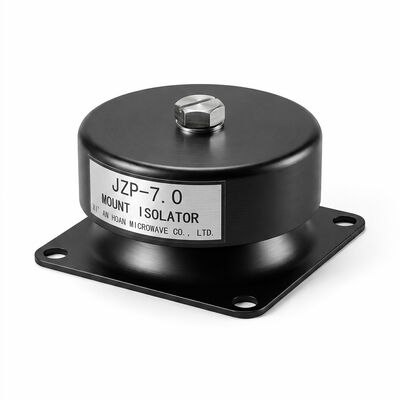
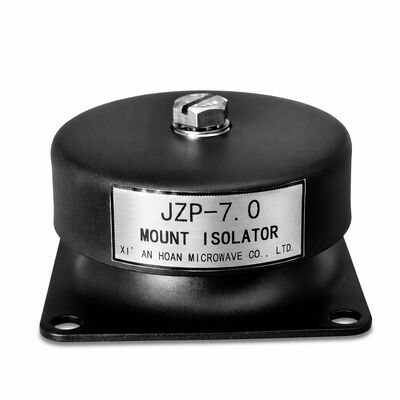
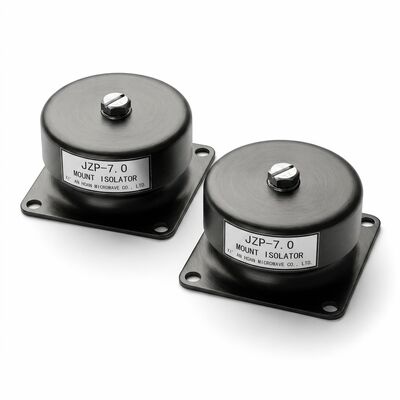
JZP-7.0 Rubber Shock Absorber Low Compression Set Permanent Elasticity Optimized Damping Ratio for Heavy Machinery

JZP-7.0 Rubber Shock Absorber Low Compression Set Permanent Elasticity Optimized Damping Ratio for Heavy Machinery

Brand Name: Hoan
Model Number: JZP-7.0
MOQ: 10 Pieces
Payment Terms: L/C,D/A,D/P,T/T,Western Union
Detail Information
Place of Origin:
Shaanxi, China
Certification:
ISO 9001:2015
Material:
NR/SBR Rubber Compound
Hardness:
Shore A 55±5
Temperature Range:
-40°C To +120°C
Load Capacity:
Up To 800 Kg Per Mount
Mounting Type:
Threaded Stud M12
Damping Ratio:
0.18–0.22
Compression Set (22h/70°C):
≤ 8%
Application:
Heavy Machinery, Industrial Presses, Compressors
Highlight:

Low Compression Set Elasticity

,

Optimized Damping Ratio Mount

,

Heavy Machinery Shock Absorber

Product Description

JZP-7.0 Heavy-Duty Rubber Shock Absorber — Engineered for Sustained Load Performance

In continuous-duty industrial environments, the economic penalty of mount degradation extends far beyond the component cost. When a vibration isolator loses height through compression set, coupled equipment shifts out of alignment—driveshafts develop angular misalignment, belt tension drifts, and bolted flange connections experience cyclic fatigue. The JZP-7.0 eliminates this failure chain at its root through a Low Compression Set for Permanent Elasticity rubber formulation that retains over 92% of its original free height after prolonged static loading, verified per ASTM D395 Method B at 70°C for 22 hours. This translates to predictable machine geometry across maintenance intervals measured in years rather than months.

Material Architecture & Compression Set Prevention

The JZP-7.0's ≤ 8% compression set performance is not achieved through excessive crosslink density alone—which would compromise damping characteristics—but through a balanced vulcanization system employing semi-EV cure chemistry with sulfur-donor acceleration. This produces a network dominated by monosulfidic and disulfidic crosslinks that resist permanent deformation under sustained compressive stress while preserving the hysteretic energy dissipation essential for vibration damping. A secondary reinforcement phase of precipitated silica, surface-treated with bifunctional organosilane coupling agents, provides additional elastic recovery without the heat buildup penalty associated with carbon black at equivalent reinforcement levels.

Optimized Damping Ratio — The Engineering Trade-Off

Conventional thinking holds that higher damping always improves isolation. In practice, excessive damping reduces transmissibility attenuation at frequencies well above resonance. The JZP-7.0's Optimized Damping Ratio of 0.18–0.22 represents a deliberate sweet spot: sufficient hysteretic damping to limit resonance amplification to a transmissibility factor below 3.0 at the natural frequency, while maintaining a roll-off slope of approximately -12 dB per octave in the isolation region. This balance is particularly effective for machinery generating broad-spectrum vibration—reciprocating compressors, hammer mills, and punch presses—where both resonance control and high-frequency attenuation are required simultaneously.

Load-Deflection Characteristics

Load (kg) Deflection (mm) Dynamic Stiffness (N/mm)
200 1.2 ± 0.2 1,630
400 2.2 ± 0.2 1,780
600 3.0 ± 0.3 1,960
800 3.8 ± 0.3 2,060

Transmissibility & Isolation Efficiency

Excitation Frequency Transmissibility Isolation Efficiency
12 Hz (near resonance) 2.5–3.0 Amplification zone
20 Hz 0.45 55%
30 Hz 0.18 82%
50 Hz 0.06 94%
100 Hz 0.015 98.5%

Physical & Mechanical Specifications

Parameter Value Standard
Overall Height 50 ± 0.5 mm
Rubber Body Diameter 85 ± 1 mm
Base Plate 95 * 95 * 4 mm, Q235 steel, zinc-plated
Stud M12 * 1.75, Class 8.8, zinc-plated ISO 898-1
Stud Protrusion 25 mm above rubber crown
Net Weight 0.65 ± 0.03 kg
Operating Temperature -40°C to +120°C continuous
Hardness Shore A 55 ± 5 ASTM D2240

Mount Selection Methodology

  1. Determine static load per mount: Divide total equipment weight by number of mounting points. Add 15% safety margin for dynamic loading and uneven weight distribution.
  2. Verify natural frequency target: For effective isolation, the disturbing frequency should exceed the mount natural frequency by a factor of √2 (approximately 1.4). The JZP-7.0's natural frequency of 10–14 Hz at rated load requires a minimum disturbing frequency of 15–20 Hz for the onset of isolation.
  3. Check deflection: Confirm that 3.8 mm static deflection at 800 kg is acceptable for the application. Precision-aligned equipment may require deflection-limiting stops—contact engineering for custom configurations.
  4. Validate environmental exposure: Ensure the -40°C to +120°C range, chemical exposure profile, and UV/ozone conditions are within the NR/SBR compound's capability envelope. For aggressive chemical environments, consult the chemical resistance guide.

Production Quality System

Each JZP-7.0 production batch is validated through: compound rheometer cure characterization to confirm crosslink kinetics match the certified master batch; statistical process control on compression set samples at 100% of AQL 1.0 Level II sampling rate; dynamic stiffness verification at 800 kg on a servo-hydraulic test frame; and 100% visual inspection with go/no-go dimensional gauging. The zinc-plated steel components undergo 48-hour neutral salt spray validation per batch to verify corrosion protection integrity prior to assembly. Certificates of conformance documenting these checks are archived by batch number and available for customer audit within 48 hours of request.

Application Engineering Notes

The JZP-7.0 is specified for installations where the economic cost of mount degradation exceeds the incremental cost of a low-compression-set design. Typical examples include: stamping press isolation where bed-to-ram alignment tolerances are sub-millimeter; reciprocating compressor packages shipped as pre-aligned skids; and generator sets installed in remote locations where service visits are infrequent and expensive. In all cases, the JZP-7.0's predictable long-term geometry retention eliminates the need for periodic realignment shimming and reduces total cost of ownership compared to conventional mounts that require replacement every 2–3 years in continuous-duty service.