logo

products details

Created with Pixso. Home Created with Pixso. Products Created with Pixso.
Wire Rope Vibration Isolator
Created with Pixso.

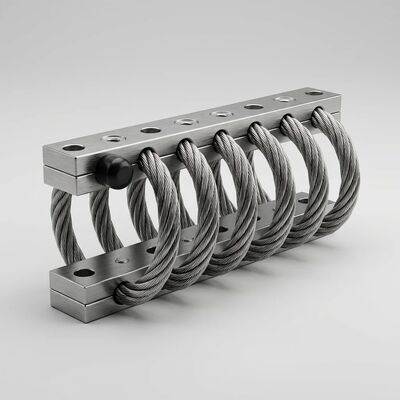
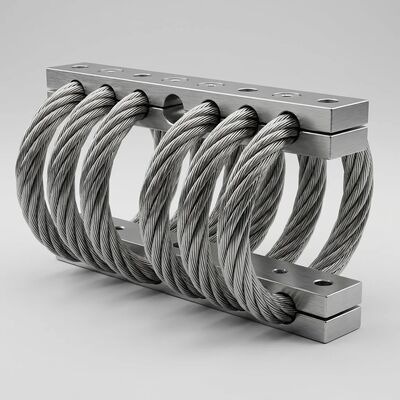
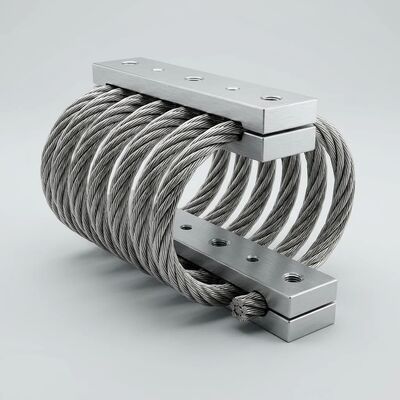
JGX-0956D-80A Galvanic Corrosion Resistant Wire Rope Vibration Isolator Radiation-Hardened for Nuclear Space Use

JGX-0956D-80A Galvanic Corrosion Resistant Wire Rope Vibration Isolator Radiation-Hardened for Nuclear Space Use

Brand Name: Hoan
Model Number: JGX-0956D-80A
MOQ: 10 Pieces
Payment Terms: L/C,D/A,D/P,T/T,Western Union
Detail Information
Place of Origin:
Shaanxi, China
Certification:
ISO 9001:2015
Model:
JGX-0956D-80A
Wire Rope Material:
Stainless Steel 316L
Number Of Coils:
8
Load Capacity (Compression):
100 Kg
Load Capacity (Shear):
50 Kg
Natural Frequency:
6-12 Hz
Damping Ratio:
≥18%
Operating Temperature:
-196°C To +350°C
Surface Treatment:
Passivated
Radiation Resistance (TID):
≥ 100 Krad
Mounting Base Material:
Stainless Steel 316L
Highlight:

Galvanic Corrosion Resistant Mounting System

,

Radiation-Hardened Nuclear Space Isolator

,

Stainless Steel Multi-Axis Damping Core

Product Description

JGX-0956D-80A Galvanic Corrosion Resistant Wire Rope Vibration Isolator

Purpose-built for dissimilar-metal mounting environments where galvanic corrosion threatens structural integrity, this isolator features a fully passivated stainless steel 316L construction — from the helical cable core to the mounting base plates. Designed and validated for high-radiation and extreme-temperature applications in nuclear power generation, aerospace launch systems, and deep-subsea equipment, it delivers decades of maintenance-free service where conventional mounts fail within months.

What Makes This Isolator Different

  • Galvanic Corrosion Elimination: By constructing every metallic component from passivated 316L stainless steel, this design eliminates the electrochemical potential difference that drives galvanic corrosion. When bolted to aluminum hull structures, steel machinery frames, or titanium aerospace brackets, no protective isolation washers or insulating coatings are required. This is validated per ASTM G71 galvanic corrosion testing standards.
  • Radiation-Tolerant All-Metal Architecture: With zero polymers, elastomers, or organic compounds, this isolator withstands total ionizing dose (TID) levels exceeding 100 krad without embrittlement, outgassing, or loss of mechanical properties. This makes it the only viable vibration control solution for nuclear power plant auxiliary systems, medical linear accelerators, and satellite bus platforms where radiation exposure is unavoidable.
  • Cryogenic to High-Temperature Continuity: The all-316L design maintains consistent damping characteristics from liquid nitrogen temperatures (-196°C) through to sustained 350°C operation. No glass transition, no thermal softening, no low-temperature brittleness — problems inherent to elastomeric isolators that this metal design completely avoids.
  • Heavy Payload Multi-Axis Control: The 8-coil helical geometry supports 100 kg in compression and 50 kg in shear while delivering a minimum 18% damping ratio. This level of multi-axis energy dissipation is critical for large compressor skids, turbine generator sets, and marine engine mounts where single-axis isolators leave equipment vulnerable to lateral and torsional vibration modes.
  • Lifetime Reliability with Zero Intervention: No rubber to crack, no fluid to leak, no torque to check. After installation and commissioning, this unit requires no scheduled maintenance for its entire design life — typically 25+ years in stationary industrial applications. This dramatically reduces total cost of ownership compared to rubber mounts requiring replacement every 3–7 years.

Technical Specifications

Rated Load — Compression Axis 100 kg
Rated Load — Shear Axis 50 kg
Natural Frequency Range 6–12 Hz
Minimum Damping Ratio ≥18%
Operating Temperature Range -196°C to +350°C
Radiation Tolerance (TID) ≥100 krad
Cable Material Stainless Steel 316L, Passivated
Mounting Base Material Stainless Steel 316L, Passivated
Number of Coils 8
Galvanic Corrosion Standard ASTM G71 Compliant

Installation & Long-Term Operation

Mounting requires standard hex tools and M10 or M12 hardware. The unified 316L base plate eliminates the need for isolation gaskets or dielectric coatings between the isolator and the host structure. For outdoor or submerged installations, the passivated surface provides pitting resistance equivalent to PREN ≥ 24, suitable for seawater splash zones and chemical processing atmospheres. After commissioning, no maintenance activities are required — visual inspection every 24 months is recommended for documentation purposes only.

Typical Deployment Scenarios

  • Nuclear power plant cooling pump and emergency diesel generator sets
  • Satellite bus structural isolation and reaction wheel mounting
  • Spacecraft payload isolation during launch vehicle ascent
  • Deep-subsea remotely operated vehicle (ROV) electronic chassis mounts
  • Medical proton therapy and linear accelerator gantry isolators
  • Offshore platform compressor and gas turbine skid mounts
  • Chemical processing plant agitator and centrifuge isolation

Quality & Traceability

Every isolator is individually serialized with full material heat-lot traceability. Load-deflection curves are recorded and archived for each shipment. Manufacturing is certified to ISO 9001:2015. Upon request, we provide EN 10204 Type 3.1 material certificates, surface passivation reports, and dye penetrant inspection records for the 316L base plates. Packaging: vacuum-sealed with humidity indicator cards, foam-cushioned in export-grade double-wall cartons.

Frequently Asked Questions

Q: How does this isolator prevent galvanic corrosion on aluminum structures?
A: By using passivated 316L stainless steel for the entire isolator — including the base plates — there is no dissimilar-metal junction to create a galvanic cell. The passivation layer further increases surface nobility, eliminating the electrochemical driver for corrosion even in salt-laden marine atmospheres.

Q: What happens to damping performance after radiation exposure?
A: Since the damping mechanism is purely mechanical (Coulomb friction between stainless steel wire strands), there are no polymers or fluids to degrade under radiation. Testing confirms that damping ratio and load capacity remain within ±3% of original values after 100 krad TID exposure.

Q: Can this unit be installed outdoors without additional protection?
A: Yes. The passivated 316L construction withstands continuous outdoor exposure including salt spray, acid rain, and industrial SO2 atmospheres. No paint, coating, or shelter is required. For applications involving direct seawater immersion, contact our engineering team for specific depth and duration guidance.