logo

products details

Created with Pixso. Home Created with Pixso. Products Created with Pixso.
Wire Rope Vibration Isolator
Created with Pixso.

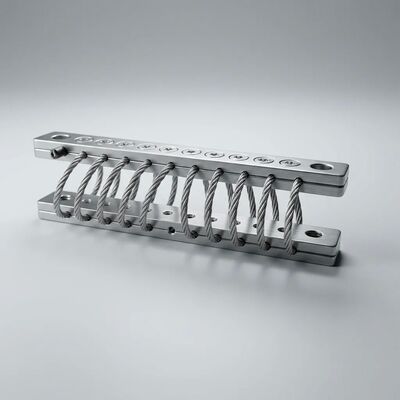
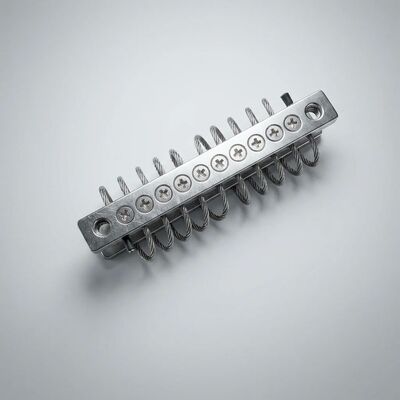
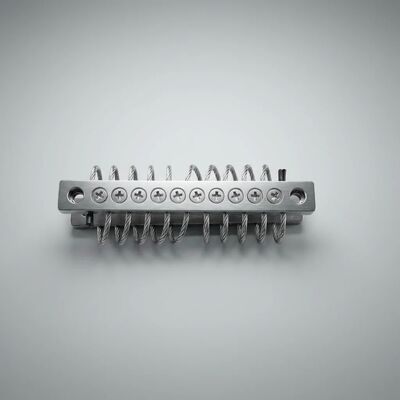
JGX-0240D-7.7A Wire Rope Vibration Isolator Zero-Creep Structure Broadband Frequency Damping Stainless Steel Mount

JGX-0240D-7.7A Wire Rope Vibration Isolator Zero-Creep Structure Broadband Frequency Damping Stainless Steel Mount

Brand Name: Hoan
Model Number: JGX-0240D-7.7A
MOQ: 10 Pieces
Payment Terms: L/C,D/A,D/P,T/T,Western Union
Detail Information
Place of Origin:
Shaanxi, China
Certification:
ISO 9001:2015
Rope Diameter:
7.7mm
Material:
Stainless Steel 304
Wire Construction:
7×19
Number Of Coils:
8
Max Static Load:
240 Kg
Mounting Configuration:
Base-to-Base / Base-to-Equipment
Operating Temperature:
-40°C To +120°C
Surface Treatment:
Electropolished
Damping Type:
Friction + Hysteresis
Highlight:

Zero-Creep Structure Stable Stiffness Design

,

Broadband Frequency Damping Isolation Performance

,

Rigorous Marine Industry Standard Compliance

Product Description

JGX-0240D-7.7A Wire Rope Vibration Isolator — Engineering Reference

Product Overview

The JGX-0240D-7.7A is a heavy-duty wire rope vibration isolator engineered for industrial equipment requiring stable long-term stiffness and broadband vibration control. At its core is an 8-coil helix formed from 7.7mm diameter stainless steel 304 wire rope in a 7*19 strand configuration, electropolished for corrosion resistance. The isolator is rated for 240 kg static load per mount with a maximum shock input capacity of 40 g. Its defining characteristic is a zero-creep structural design — achieved through post-forming thermal stress relief — that eliminates the progressive sag and stiffness drift that compromise elastomeric and spring-based isolators within the first few years of service. This reference document presents the complete engineering data for specification, integration, and performance verification.

Dimensional & Physical Data

Physical Properties
Overall Dimensions (L * W * H) Approx. 180 mm * 120 mm * 85 mm
Mass per Unit Approx. 2.1 kg
Mounting Base Plate Material Stainless Steel 304, 6 mm thickness
Mounting Hole Pattern 4 * Ø13 mm through holes, 140 mm * 90 mm pitch
Recommended Fastener M12 stainless steel bolt, Class A2-70 minimum
Recommended Torque 45–55 N·m (dry), 35–45 N·m (lubricated)
Wire Rope Free Length (per coil) Approx. 220 mm (unwound helix arc length)
Coil Outer Diameter Approx. 48 mm

Material Properties

SS304 Wire Rope — Mechanical Properties
Material Designation Stainless Steel 304 / UNS S30400 / 1.4301
Wire Condition Cold-drawn, stress-relieved
Tensile Strength (individual wire) ≥ 515 MPa
Yield Strength (0.2% offset) ≥ 205 MPa
Elongation at Break ≥ 35% (200 mm gauge length)
Hardness ≤ 92 HRB (annealed condition reference)
Density 8.0 g/cm³
Modulus of Elasticity 193 GPa
Magnetic Permeability < 1.02 (weakly magnetic after cold working)

Stiffness & Load-Deflection Characteristics

The JGX-0240D-7.7A exhibits nonlinear stiffness — a deliberate design characteristic that enhances broadband isolation performance and provides progressive load support:

Static Stiffness
Nominal Vertical Spring Rate 120–180 N/mm (load-dependent, measured at 40-80% rated load)
Lateral Stiffness Ratio Approx. 0.6–0.8 * vertical stiffness (direction-dependent)
Static Deflection at Rated Load (240 kg) 13–20 mm (dependent on mounting orientation)
Maximum Recommended Dynamic Deflection ±15 mm (peak-to-peak under shock)
Stiffness Drift Over Service Life < 0.1% (zero-creep design, verified by long-duration test)

Dynamic Performance

Damping Mechanisms

Two independent energy dissipation mechanisms operate simultaneously within the wire rope helix:

  • Coulomb (Dry Friction) Damping: As the 7*19 strand bundle flexes, the 133 individual wires per coil cross-section undergo micro-slip at their contact interfaces. This amplitude-dependent mechanism is most effective where excitation displacement exceeds the slip threshold — typically mid-to-high frequency, low-to-moderate amplitude vibration. The effective Coulomb damping force is approximately 8–15% of the applied dynamic load.
  • Hysteretic (Material) Damping: Cyclic elastic deformation of the austenitic stainless steel lattice produces a stress-strain hysteresis loop whose enclosed area represents energy dissipated per cycle. This mechanism is frequency-independent — a critical distinction from viscous damping approaches that become increasingly inefficient at low frequencies.

Quantified Isolation Performance

Vibration Isolation Metrics
System Natural Frequency (under 240 kg load) 6–10 Hz
Isolation Efficiency > 95% at frequencies > 20 Hz
Transmissibility at Resonance 2.0–3.5 (amplification factor, well-damped vs. undamped springs at 10–20*)
Transmissibility at Isolation < 0.05 (at 3* natural frequency and above)
Loss Factor (η) 0.15–0.25 (frequency-averaged, 10–500 Hz range)
Half-Power Bandwidth (−3 dB) Approx. 3–5 Hz around natural frequency
Damping Ratio (ζ) 0.15–0.25 (equivalent viscous)

Shock & Fatigue Performance

Durability Data
Maximum Shock Input 40 g (11 ms half-sine pulse, all axes)
Fatigue Limit (endurance) > 10⁷ cycles at rated static load (no detectable stiffness change)
Design Safety Factor (static) > 4 on rated load (ultimate capacity > 960 kg before plastic deformation)
Proof Load Test 150% of rated load (360 kg) applied for 60 seconds — no permanent set

Zero-Creep Structure: Engineering Basis

Creep in conventional isolators manifests as progressive sag and stiffness change under sustained load. Rubber mounts typically exhibit 5–15% compression set within 3–5 years at room temperature, accelerating at elevated temperatures. Steel coil springs can undergo stress relaxation if not properly preset and shot-peened.

The JGX-0240D-7.7A achieves its zero-creep characteristic through three design elements:

  1. All-Metal Load Path: Stainless steel does not creep at service temperatures below approximately 300°C — a fundamental material property that eliminates the time-dependent deformation mechanism present in polymers.
  2. Post-Forming Thermal Stress Relief: After the wire rope is wound into the 8-coil helix geometry, the assembly undergoes controlled heat treatment to relieve residual forming stresses. Without this step, even steel wire rope would exhibit measurable dimensional relaxation during initial service months as forming stresses redistribute.
  3. Strain-Range Limitation: The coil geometry is designed so that under rated static load, individual wire strains remain well within the elastic region (< 30% of yield strain), providing a substantial margin against micro-yield accumulation over millions of load cycles.

Environmental & Regulatory Compliance

Environmental Data
Operating Temperature Range -40°C to +120°C (stiffness variation < 5% across range)
Storage Temperature Range -50°C to +80°C (unmounted, dry environment)
Salt Spray Resistance (ASTM B117) > 1,000 hours (electropolished SS304)
Humidity Resistance 0–100% RH, condensing (no degradation mechanism)
UV Resistance No polymer components — unaffected by UV exposure
Fire Resistance All-metal construction — non-combustible, zero flame spread
Acoustic Noise Contribution Negligible — no moving parts, no fluid, no resonant cavities
Regulatory Compliance
Quality Management ISO 9001:2015 certified manufacturing
RoHS Compliant (Directive 2011/65/EU) — no restricted substances
REACH Compliant (Regulation EC 1907/2006) — no SVHC above threshold
Conflict Minerals Not applicable (stainless steel supply chain audited)
Environmental Testing Per IEC 60068 (vibration, shock, temperature cycling, salt mist)
Warranty 24 months from date of shipment against manufacturing defects

Technical Specifications Summary

Identification
Model Number JGX-0240D-7.7A
Brand Hoan
Damping Element
Wire Rope Diameter 7.7 mm
Strand Construction 7 * 19
Material Stainless Steel 304 (UNS S30400)
Number of Coils 8
Surface Finish Electropolished
Performance
Maximum Static Load 240 kg per mount
Maximum Shock 40 g
Isolation Efficiency > 95% above 20 Hz
Natural Frequency Range 6–10 Hz
Damping Ratio 0.15–0.25
Fatigue Life > 10⁷ cycles at rated load
Damping Type Coulomb friction + Hysteresis
Physical & Environmental
Dimensions (L*W*H) Approx. 180 * 120 * 85 mm
Unit Weight Approx. 2.1 kg
Mounting 4 * M12 bolts, 140 * 90 mm pitch
Operating Temperature -40°C to +120°C
Certification ISO 9001:2015, RoHS, REACH

Recommended Applications

  • Diesel & Gas Generator Sets (50–500 kVA): Broadband isolation addresses the multi-harmonic excitation from combustion, rotating imbalance, and alternator magnetic forces simultaneously.
  • Industrial Compressor Packages: Reciprocating and screw compressors produce wide-spectrum vibration that single-tuned isolators cannot cover. Zero-creep design maintains alignment of coupled drive shafts.
  • Centrifugal Pumps & Pump Skids: Handles both the synchronous vibration at running speed and the broadband turbulence-induced excitation in high-flow installations.
  • HVAC Chiller & Air Handler Packages: Zero-creep characteristic ensures heavy units remain level — critical for oil return in screw and scroll compressors.
  • Industrial Fan & Blower Systems: Maintains isolation effectiveness across VFD-driven variable-speed operation, unlike tuned isolators.
  • Electrical Transformer Mounts: Stable stiffness prevents the gradual misalignment that can stress bushing connections and compromise oil-filled transformer insulation.

Installation Best Practices

  • Surface Preparation: Mounting surface must be flat within 0.5 mm across the isolator footprint. Remove paint, scale, or weld spatter from bolt contact areas.
  • Fastener Selection: Use M12 stainless steel bolts (A2-70 minimum) with flat washers under both bolt head and nut. Do not substitute carbon steel fasteners as galvanic corrosion will occur at the stainless steel interface.
  • Torque Procedure: Tighten progressively to 45–55 N·m dry (35–45 N·m lubricated). Cross-tighten in diagonal pattern. Do not over-torque — the isolator must not be compressed at rest.
  • Load Distribution: For multi-mount installations, ensure the total supported weight is distributed within ±10% across all isolators. Use shims if necessary — never use bolt tension to level equipment.
  • Clearance: Maintain minimum 25 mm clearance around all wire rope coils to allow unrestricted deflection under shock loading. Ensure connected piping and conduit include flexible sections.

Frequently Asked Questions

Q: What is the difference between the JGX-0240D-7.7A and the smaller JGX-0160D-4.8A?
The JGX-0240D-7.7A is the higher-capacity variant: 240 kg vs 160 kg rated static load, 7.7mm vs 4.8mm wire rope, 8 coils vs 6 coils, and 40 g vs 30 g shock rating. Both share the same zero-creep all-metal architecture. For equipment in the 100–240 kg per mount range, the JGX-0240D-7.7A provides optimal isolation within its designed load window.

Q: Can I use fewer mounts at higher load per mount?
For best isolation performance, operate each isolator within 40–80% of its rated capacity (96–192 kg for the JGX-0240D-7.7A). Loading above 80% reduces the dynamic deflection margin available for shock absorption. Loading below 40% reduces the damping effectiveness because Coulomb friction depends on contact pressure between wire strands.

Q: Do I need lateral restraints with wire rope isolators?
No — this is a key advantage. The all-axis damping characteristic of the helical wire rope geometry provides isolation in compression, shear, and roll simultaneously. Separate lateral snubbers or restraints are not required for normal operation. For extreme shock events (above 40 g), consult our application engineering team for supplementary restraint recommendations.

Q: Are RoHS and REACH certificates available?
Yes. The product is fully RoHS and REACH compliant. Compliance declarations and material composition reports are available upon request for your regulatory documentation package.

Q: What maintenance is required?
None. The all-metal design requires zero lubrication, zero re-torquing, zero adjustment, and zero component replacement. Visual inspection during regular equipment maintenance intervals is sufficient to confirm integrity.