logo

products details

Created with Pixso. Home Created with Pixso. Products Created with Pixso.
Rubber Shock Absorber
Created with Pixso.

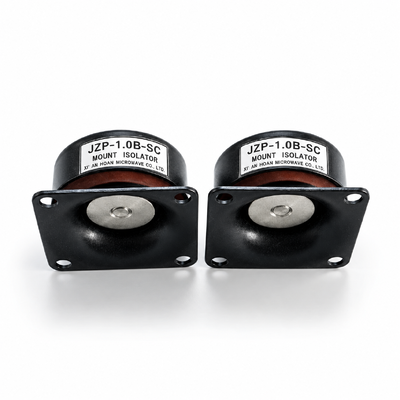
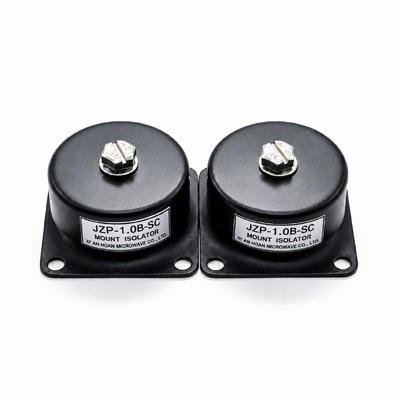
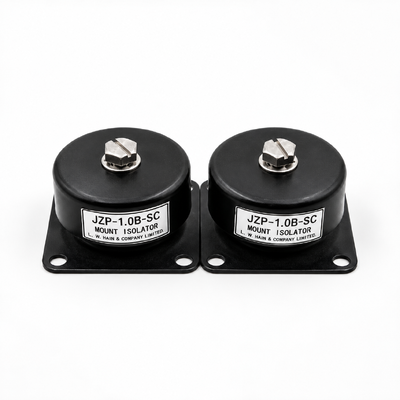
JZP-1.0B-SC Rubber Shock Absorber 1.0kg Nominal Load 41.5Hz Tuned Natural Frequency M4 Mount

JZP-1.0B-SC Rubber Shock Absorber 1.0kg Nominal Load 41.5Hz Tuned Natural Frequency M4 Mount

Brand Name: Hoan
Model Number: JZP-1.0B-SC
MOQ: 4 Pieces
Payment Terms: L/C,D/A,D/P,T/T
Detail Information
Place of Origin:
Shaanxi, China
Certification:
ISO9001:2015
Deflection At Rated Load:
<=0.3 Mm
Resonance Frequency:
41.5 +/-5 Hz
Recommended Service Band:
>=59 Hz (ratio >=1.414)
Sweep Window (test Only):
5-50 Hz At 0.5 G
Damping Ratio:
>=0.08
Storage Validity:
8 Years
Highlight:

Precise Natural Frequency Tuning 41.5Hz

,

FEA-Optimized Stress Distribution Geometry

,

Resonance-Free Rubber Shock Absorber

Product Description
JZP-1.0B-SC Rubber Shock Absorber 1.0kg Nominal Load 41.5Hz Tuned Natural Frequency M4 Mount
JZP-1.0B-SC

Rubber Shock Absorber · JZP-B-SC series · Xi'an Hoan Microwave Co., Ltd. · Shaanxi, China · ISO9001:2015

In one paragraph: the JZP-1.0B-SC is a 46 mm rubber-to-steel isolator that carries 1.0 kg and puts its resonance at 41.5 ± 5 Hz. The elastomer profile was iterated in finite element analysis so working strain spreads across the whole rubber section instead of concentrating at the bondline, which keeps the frequency target stable batch after batch and keeps a mounted enclosure out of its amplification zone.

  • Rated vertical load1.0 kg · 9.8 N (±5%)
  • Resonance point41.5 ± 5 Hz
  • Settling travel≤ 0.3 mm under load
  • Shock qualification100 g, twelve 11 ms half-sine pulses
  • Thread & envelopeM4 internal · 46 mm Ø · 30 mm high
  • Service climate−45 °C to +65 °C

At a glance: six answers, one data source

Question a buyer usually asks Answer for JZP-1.0B-SC Condition behind the figure
How much mass can one unit support? 1.0 kg nominal (9.8 N), ±5% Static, pure vertical compression, 20 ± 5 °C
Where does it resonate? 41.5 Hz, spread ±5 Hz 5–50 Hz sine sweep at 0.5 g, 1 oct/min, single vertical axis
How far does it sink when loaded? 0.3 mm or less Read after 10 minutes of settling at rated load
What shock level has it passed? 100 g peak, 12 pulses 11 ms half-sine, three axes, four pulses per axis, rigid base
Which thread does it take? M4 internal, class 6H Install torque capped at 3 N·m
How long does the part stay in tolerance? 8 years storage validity Unloaded, sealed carton, below 30 °C

All six answers are the controlled JZP-1.0B-SC values from the JZP-B-SC selection sheet. Nothing on this page is rounded up, re-rated or extrapolated from a sister model.

Full parameter set with units, limits and test conditions

Each line states the number, the unit it is measured in, the tolerance band that governs acceptance, and the condition that produced it. Where a figure is a design floor rather than a measurement, the last column says so plainly.

Parameter Value Unit Tolerance / limit How it is established
Rated load Pz 1.0 kg (9.8 N) ±5% Static vertical load, 20 ± 5 °C
Deflection at rated load 0.3 max. mm upper limit only Dial gauge after 10 min settling
Resonance fn 41.5 Hz ±5 Hz Sine sweep 5–50 Hz, 0.5 g, 1 oct/min, vertical
Damping ratio ζ 0.08 min. — design floor Half-power bandwidth evaluation at 20 ± 2 °C
Shock capability 100 g 12 pulses, 11 ms half-sine Three axes, four pulses each, rigid fixture, function checked after run
Operating temperature −45 to +65 °C no derating inside range Continuous duty, static preload present
Elastomer hardness 45–70 Shore A ±5 ASTM D2240, coupon from same batch
Storage validity 8 years from production date Unloaded, dark, below 30 °C, no solvent contact

Two frequency numbers, deliberately separated

Buyers regularly confuse the band they should design into with the band the lab sweeps. They are printed side by side here so the difference survives being copied into a specification.

Laboratory sweep window (verification only)

5–50 Hz

Single-axis vertical sine sweep, 0.5 g, one octave per minute, 1.0 kg steel block on a ground fixture, ambient 20 ± 5 °C.

Its only job is to locate fn and record transmissibility. The sweep window is a bench setting, never a service recommendation, and the two must not be quoted interchangeably in a tender document.

Both figures trace to the same unit at the same preload; they differ in purpose, not in measurement.

Design detail: tuning the resonance and spreading the stress

Frequency is a design output, not a lucky accident. Compound hardness, insert geometry and bondline thickness are treated as one controlled set on this part. That is why the resonance of a delivered unit stays inside 41.5 ± 5 Hz instead of drifting with cure variation. When the excitation of a fan, a servo drive or a road input is known, the ratio between that excitation and 41.5 Hz decides whether the mount helps or hurts — and that ratio is knowable before the first prototype.

Stress distribution was solved before tooling. Finite element iterations moved peak strain off the insert corner and into the bulk of the elastomer, so a combined compression-and-shear event no longer starts a tear at the spot where rubber meets metal. The practical outcome is a part that holds its stiffness through repeated shock rather than softening after a few hundred cycles.

  • Controlled resonance target: 41.5 ± 5 Hz at 1.0 kg, checked per production batch.
  • Balanced strain field: fillet radius and insert profile sized from the finite element study, not from trial moulds.
  • Repeatable settling: 0.3 mm or less at rated load, so optical and sensor alignment survives a rebuild.
  • Climate headroom: rated from −45 °C to +65 °C, with 100 g shock capability.
  • Predictable ageing: no measurable creep or drift in the manufacturer's long-run records.


Geometry and outline drawing

JZP-B-SC series outline drawing with dimension marks
Outline drawing for the JZP-B-SC family. Sizes in millimetres; free height H is measured unloaded and carries ±1 mm, hole spacing A carries ±0.2 mm.


Transmissibility across the sweep

Transmissibility curve for the JZP-B-SC series at 1.0 kg
Transmissibility against frequency for the JZP-B-SC family at 1.0 kg payload. Bench condition: 5–50 Hz sine sweep, 0.5 g, 1 oct/min, vertical axis, ground steel fixture, 20 ± 5 °C.

Response to the 100 g impact

Impact response curve at 100 g, 11 ms half-sine
Impact trace at 100 g peak, 11 ms half-sine, twelve pulses over three axes, 1.0 kg payload on a rigid base. Peak transmitted acceleration and settling time read directly off this record.

Curve provenance: fixture and instrumentation

  1. One isolator sandwiched between two 20 mm surface-ground steel plates, M4 capscrew set at 3 N·m into the bonded insert.
  2. Payload is a 1.0 kg stainless block, centred so the centre of mass sits within 2 mm of the mount axis.
  3. Drive applied at the lower plate; accelerometers on both plates; 200 Hz sampling per channel, two channels logged in parallel.
  4. Bare-plate sweep run first to prove fixture resonance stays above 500 Hz, keeping the measurement window clean.
  5. Room held at 20 ± 5 °C, payload laterally free, so the published trace is pure vertical transmissibility.

Where the published data stops applying

  1. Vertical compression is the qualified direction. Sustained tension or a standing shear load sits outside the envelope.
  2. Keep preload between 0.8 kg and 1.2 kg. Lighter loads push fn upward, heavier loads eat the 0.3 mm deflection margin.
  3. Curves hold at 20 ± 5 °C. Stiffness drifts at either end of the −45 to +65 °C range, so re-rate before specifying a cold-chain or engine-bay position.
  4. The compound resists ozone, ultraviolet light, seawater and common chemicals, but the part is not a sealed barrier and should not be immersed.
  5. Ripple data cover 20–2000 Hz. Tones above 2000 Hz need a second decoupling layer rather than a stiffer mount.
  6. Four units or more are recommended per enclosure so that a single failure never leaves a corner unsupported.
Send the payload mass, the excitation spectrum and the bracket envelope. We return a signed selection sheet with figures for your exact preload.